This is Part 2 of a two-part series. In Part 1, I introduced my Right to Win framework, a four-phase methodology for helping B2B tech companies prioritize the use cases where they’ve genuinely earned the right to win. If you missed it, start there.
Quick recap: for years, I’ve been running my Right to Win prioritization methodology out of a three-tab Excel workbook. It worked. It also broke at inconvenient times, gave my colleagues minor anxiety every time I handed it over, and was never quite the polished, shareable tool I always imagined it could be.
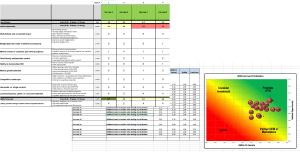
My Right To Win Excel model
I always thought it would be cool to have it built as a proper application. But who had the time and money to work on something like that?
Then I tried Claude Code. And a lot changed in about two and a half hours.
I’m not a developer, but I tried Claude Code
I am not a software developer. But I am a tech-savvy marketer who’s unafraid of learning new tools and skills, and is more than happy to fail and iterate.
After hearing from so many marketing colleagues about their experiences with AI coding assistants, I decided it was time to join the party and just play. I opened Claude Code, described my methodology and goals for what I wanted to build, and uploaded my Excel model to provide context.
Gotta admit, it was pretty cool.
What I asked for
I told Claude Code what the application needed to do: facilitate the same three-tab logic from my spreadsheet, now as a browser-based interactive tool. I described the scoring criteria, the weighting system, the priority quadrants, and the heat map visualization. And then I hit enter.
Version one was already fully functional and impressive, but it was missing a few key features and settings that I’d neglected to request. A few iterations later, all managed through the conversational interface, no coding required, I had a fully functional, single-file React-based HTML application.
The last step was branding. (I am a marketer, after all.) I uploaded my brand kit to guide it on colors, fonts, logo, and other design elements. Now I have a fully functional, branded app that does everything the spreadsheet could do, but with a cleaner and more user-friendly experience.
And because I didn’t want the headache of maintaining a cloud application that manages sensitive client data, I designed it as a desktop app that stores all information locally on the device and is shareable as a single file. No reason it can’t become a secure cloud app in the future, I just don’t have that need today.
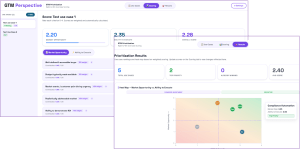
Right to Win AI App screenshots
And yes: the whole project, start to finish, took less than two and a half hours.
What this means for GTM leaders
A few things stuck with me from this experience that feel worth sharing.
The methodology and process are everything. Claude Code helped me turn a good tool into a great reusable application. But it couldn’t have done that without a decade of working through the best way to solve the problem. AI all but eliminated the time and cost of building, but it didn’t generate the thinking. That’s still a very human job.
The collaboration model is genuinely different. I wasn’t writing code and hitting errors. I was having a conversation about what I needed, reviewing outputs, giving feedback, and iterating. It felt much closer to working in a room looking over the shoulder of a skilled developer than anything resembling “learning to code.” Which, for marketing leaders like me, opens an extraordinary number of new doors to deliver scale, efficiency, and impact.
My 80/20 instincts still apply. I didn’t try to build a fully-featured SaaS product. I built the thing that solved my specific problem, for my specific workflow. Scope discipline didn’t go away; AI just made the execution faster.
The broader point
Here’s what I keep coming back to: the barrier to increasing innovation and efficiency in marketing processes used to be time, money, and technical skills. For most marketing leaders, at least two of those three were prohibitive. That math has changed.
If you have a proprietary framework, a mental model, or a process you’ve been running out of slides, spreadsheets, and SharePoint sites, there’s a real chance you can now transform it into something better. Not as a side project that takes months. It’s something you can build today and start to pilot tomorrow.
The Right to Win is earned, not assumed. That’s still true whether we’re talking about use case prioritization or deciding where to invest your AI experiments. The framework, the discipline, the thinking is all still yours to bring.
The app just makes it easier to share.
Want to see the Right to Win methodology in action for your business? I’d love to connect.