
What’s the primary role of product marketing managers (PMMs)? To create the right messaging and GTM strategy that will convince people to prioritize and spend money on your products and services. But let’s face it, no matter how convincing your messaging may be – and armed with the most talented sales and marketing teams in the biz – customers and prospects understand you’re biased. Your objective is to win their business, and you both know it. Nothing wrong with that goal, but that’s why prospects look beyond a vendor’s website and pitch when making a purchase decision.
I’ve discussed in a prior article why it’s so important to influence industry analysts to buy in and promote your story. That third-party expert validation proves what you’re pitching isn’t hogwash. But the most effective and critical third-party validation will come from your happiest customers. For example, Rotten Tomatoes has a massive impact on the success or failure of new movies being released. The responses they capture from critics and moviegoers have elevated or sunk many feature films. (Not going down the rathole of quality control or intentional trolling issues that the website faces – just making a point regarding its impact). As social creatures, we value the opinions and feedback of others when making important purchase decisions.
Enter customer advocacy – a critical, yet often underinvested and underappreciated marketing function. Advocacy’s role is very similar to product marketing (and are often part of the same team). They are building a story about your company, your products, and the value delivered. But their critical distinction: telling the story from your customer’s perspective based on their actual experiences and results.
Obstacles to recruiting advocates
I was lucky enough to manage the amazing customer advocacy & reference management team at Informatica. I had a wealth of support from leadership to invest in people and technology to ensure we could support the customer story and reference requirements from our sales, enablement, and marketing colleagues. With thousands of happy customers, you’d think recruiting customers to share their stories publicly – or to be an available sales reference – would be a piece of cake. But as any advocacy expert knows, there are many barriers to recruiting and maintaining customers as advocates. Common obstacles include:
- The customer’s public relations or communications team won’t allow it. They don’t perceive any benefit for their brand and only see risk (e.g., publicly associating with a brand that may detract from theirs). This is especially common for the largest global brands – kudos to anyone who gets Apple or Disney to give permission to use their logos!
- Customer champions have no interest. Even your most loyal champions may not perceive any personal benefits to participating in your advocacy program.
- Individual sales reps reserve back-pocket references. The sales rep doesn’t trust the advocacy team to protect and use their happy customer references appropriately – so they don’t share it with the rest of the company.
- Reference burnout. If you keep going to the same customer for sales reference calls, speaking events, and other activities – they will eventually cry uncle and ask to take a break.
- Story freshness. That amazing customer story from a few years ago is great, so we use it all the time. But who’s checking to confirm the old stories are still accurate? The customer may be using your product for different use cases, using different products, or the value received has changed. Or worst of all, they may no longer be happy – or even a customer.
- Support escalations. Even your happiest customers can face challenges. Maybe a bug or an outage seriously impacted their business. Do you have a process to ensure customers with product issues are not contacted for advocacy or reference support during that time?
- Your champion left. You have one or two champions that evangelized your selection or renewal and are your primary advocacy points of contact. What if they leave? Who will go to bat for you?
- Monitoring churn risk. Yes, even happy customers churn if they’re facing a budget crunch and need to reduce spending, or they get acquired and are required to use the acquiring company’s solution.
- Attracting the right job titles. End users may love your product, but typically don’t pay for the software or have the responsibility of proving the value of your product to leadership. For example, if a CFO is a buyer you’re looking to influence, then you want a reference or success story about another CFO’s success.
Many of the above challenges can be effectively overcome by focusing on a single fact: Customer advocates are people, not companies.
Your customer advocacy team will identify what motivates your happiest customers, and build programs and processes to deliver great experiences for them.
What motivates customers to participate?
Identify what you can offer that would be considered valuable to the people involved that would encourage participation. Common drivers of individual advocacy participation include:
- Personal brand-building. Many people are great at their jobs, but not everyone is great at self-promotion. It’s not something I’ve ever been comfortable with either, but if you don’t own your own narrative – who does? When you offer your champion the opportunity to position themselves and their team as best-in-class practitioners of the solutions they’ve implemented, you can help them get promoted, get approval for an increase in budget, or find their next job.
- Company brand-building. PR teams may not initially understand the value of publicly promoting their story using your solutions, but share how you can help to promote their company as a best-in-class innovator in areas of their business that would be important to their customers, shareholders, and/or employees.
- Career skills development. We PMMs typically have endless opportunities for public speaking and writing, but many of your customers do not and would significantly benefit from these experiences. You can offer them speaking opportunities for a live event, webinar, or podcast or offer them to be guest authors for a blog or social media post to provide writing experience.
- Peer-to-Peer networking: Communities. Providing virtual and/or in-person community forums not only provides existing customers an opportunity to learn or share best practices but can also elevate your brand and attract non-customers (aka FUTURE customers!). A former colleague, Joel Primack, has posted terrific content and advice on how to get your community strategies started.
- Peer-to-Peer networking: User Groups. User Groups are usually reserved for existing customers, and allow for both sharing of best practices using your technology, and also provide valuable feedback to product teams for future roadmap needs. In my personal experience, Informatica built amazing longstanding regional User Groups where loyal customers themselves would support the recruitment of members and lead the meetings.
- Influencing vendor strategy. Customer Advisory Boards (CABs) and Product Advisory Councils (PACs) are events where a small group of customers comes together to provide feedback and guidance to either your business leaders and/or product teams on business and product strategy. Customers value this experience because they get to influence the strategy for a business partner they’ve deemed critical for their job.
- Gamification – A self-service way for customers to pick and choose the advocacy and engagement activities that interest them the most. They accumulate ‘points’ that they can use towards swag, event and software discounts, and other perks. Platforms like Influitive have been popular with advocacy and customer marketing teams to help enable these capabilities.
- Incentives to provide online reviews. Sites like G2, Gartner Peer Insights, TrustRadius, and many more have become increasingly influential in helping customers determine what vendors they eventually choose to evaluate and select. While Federal Trade Commission (FTC) guidelines forbid offering incentives conditional on receiving positive reviews, it is acceptable to offer gift cards, cash, charitable donations, or other nominal incentives when asking customers to submit a review they deem appropriate. That’s why you should only offer incentives to vetted customers who you know are happy and would most likely provide a positive review.
So many ways for customers to engage
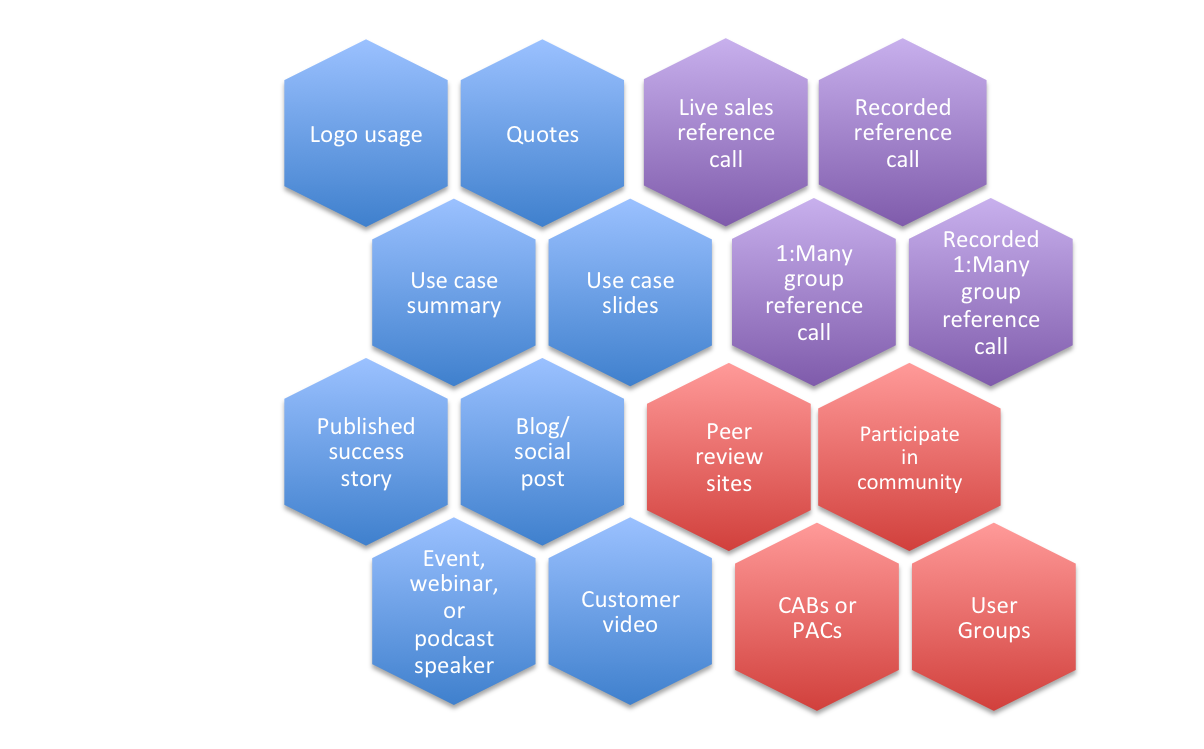
Advocates can start small and grow as you prove your program to be trustworthy and valuable
Product marketing + customer advocacy is a powerful combination. PMMs determine the best way to position your company and products to be successful, but customer advocacy teams then find the right customers that can validate and evangelize that story through all your go-to-market channels! If you don’t feel your organization is sufficiently prioritizing customer storytelling, make some noise!