
The marketecture is such a great illustration of product marketing’s value – summarizing the differentiated value of an entire product and service portfolio into a simple, easy-to-understand graphic. Yet the creation of this graphic is one of the most complicated cross-functional undertakings that can often take months (or longer) to deliver. When done well, the value generated from this simple graphic can be a game-changer.
As a simple definition for the uninitiated, a marketecture (or marketing-centric architecture) is a way to remove the technical complexity when attempting to introduce a technology vendor’s portfolio to any stakeholders – including those new to your technology market. First, let’s address who benefits from a marketecture. These stakeholders often include, in no particular order:
- Sales reps. The marketecture is often the core of the corporate sales pitch deck. The pitch deck definitely deserves its own article (so stay tuned), but for now, it’s important to understand that the sales cycle for any larger deals – especially at the enterprise level – will require multiple conversations with a wide variety of decision-makers. That first sales pitch that introduces the company and products to the top influencers is key to being invited back for the next conversation.
- Presales/solution consultants. Before jumping right into a product/feature deep dive or product demo, presales experts will often want to set the stage with a higher-level view of what they will be showing. The marketecture can be that one-slide setup before digging deeper.
- Website marketing. A well-done marketecture can be a great hero image for the top of a platform, solution, or product web page, providing context and encouraging interest to click into the individual product pages below it.
- Partners. Many B2B SaaS vendors rely heavily on technology, implementation, distribution, resale, or consulting partners to expand their reach, relevance, and value. Similar to the sales pitch deck, the partner pitch deck is equally important to building interest when courting strategic partners.
- Investors. When the CEO, CFO, and other leaders hit the road to raise funds, potential investors want to know what the company is selling and why it will make tons of money. They don’t need to know every technical decision that went into building the products, and a marketecture is a great way to provide that high-level overview without losing them into technical minutia.
Different types of marketecture
Not all marketectures are the same and often serve different purposes. How it’s constructed should depend on your market, portfolio, and GTM strategy. Here are some of the different types of marketecture that I’ve come across with some examples. Important note: I’m not implying the examples I’m sharing are good or bad – I’m only using them as illustrations of different approaches used. Since the value of any marketecture is so tied to business goals and contexts like product strategy, market landscape, market maturity, sales experience, and GTM strategy, the picture alone won’t determine its usefulness.
The Layer Cake: Platform vendor. This approach is extremely popular when communicating a multi-product portfolio that is promoting a platform with multiple products sharing common platform capabilities (e.g., connectivity, administration, UX, or other shared services).

The Layer Cake: Stack vendor. This approach is popular when communicating a multi-product portfolio that is promoting products across multiple layers of a tech stack (e.g., selling infrastructure, middleware, and applications).
This older marketecture from SAP below is an example of a mega vendor that plays in multiple layers of a tech stack and was focused on selling an entire footprint.

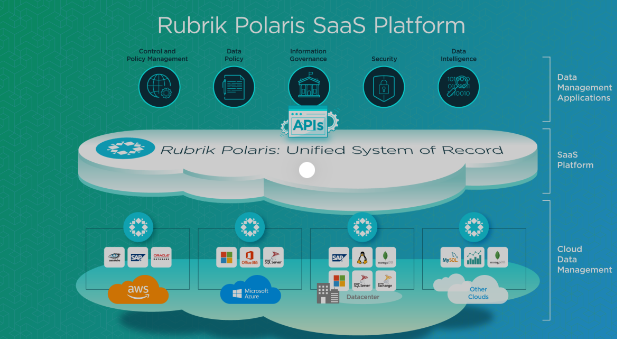
The Layer Cake: Multi-vendor ecosystem. This approach is popular when the success of a vendor’s products is reliant on its interoperability with other key technologies in the market. Common usage of this approach includes when your products are meant to optimize experiences when using other strategic technology investments, as with cloud infrastructures like AWS, Azure, or Google Cloud, or even with major application stacks like Salesforce or Workday. Alternatively, you often see Input-Output Flow approaches used here when the marketecture is meant to highlight the vendor solution’s interconnectivity with both upstream source systems and downstream consuming systems.
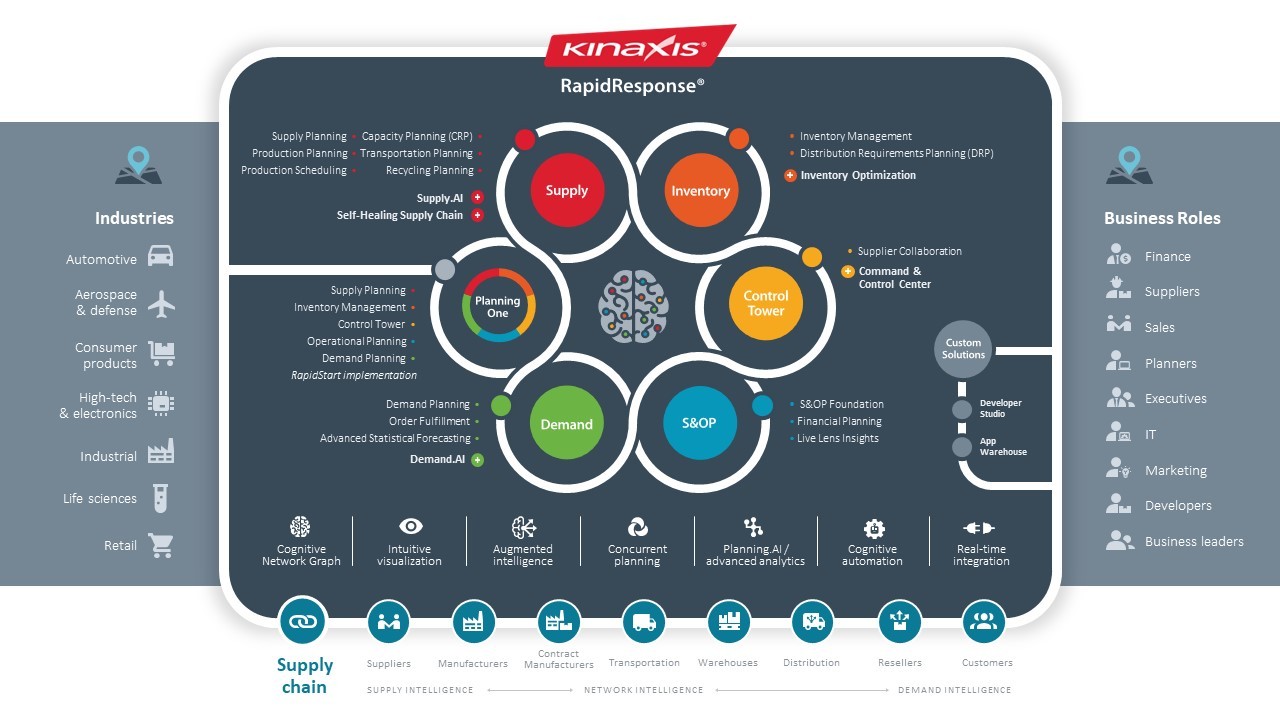
The Solution-centric. Referring back to my last article discussing Solution Marketing vs Product Marketing, this type of marketecture is valuable when the GTM strategy is very focused on the solution sale, solving target business challenges. In these examples, the key differentiators of the products and technology supporting the solutions may be mentioned, but they’re not the main point. A solution-centric marketecture aims to get senior leadership buy-in that your company understands how their business is run and what challenges are being faced. With that credibility, the goal is to get that invitation back to go deeper into products with the technology decision-makers. In these marketectures, you’ll often see an additional focus on the use cases, personas, and target markets that the vendor is serving, as with the Kinaxis example below.
An important tip on designing your marketecture:
Just because layer cakes and flows are common doesn’t mean they are right for you. A memorable, distinct design can be awesome. You’ll find a wide variety of other visualizations for marketecture, including hubs and spokes, speedometers, wheels, Venn diagrams, infinity loops, process flows, and many more. On its own, there’s no right or wrong visual design – it’s all about how the visual and the copy support the narrative.
But always remember, the design should help to simplify and reinforce the message. So don’t allow your excitement for an awesome-looking graphic to lessen the impact of the message. The best graphic design partners I have worked with evangelize a less-is-more mantra, which is why the PMM/Design partnership is so valuable.
Marketecture Do’s and Don’ts
I feel these recommendations are valid no matter what you’re selling and to whom.
Marketecture Do’s
- Use the 80/20 rule. You may need to fight the urge to include every product and/or use case. If your list starts to get long, you’ll want to figure out how to highlight the most valuable ones. If you have a large product portfolio, maybe focus on product families vs individual products. If you support a wide variety of use cases, choose the 3-5 that likely account for the majority of your revenue and pipeline.
- Make it a competitive differentiator. Don’t design it in a vacuum – do your market research and understand what your competitors, your partners, and adjacent technology vendors are doing well – and where they’ve missed an opportunity to distinguish themselves.
- Make it visually appealing. Please partner with an experienced graphic designer! If you have one in-house that already understands your corporate brand guidelines, all the better. If not, this is one of the graphics your business will create that merits investment in an external agency or freelance designer to help. This graphic is just too impactful to take shortcuts.
Marketecture Don’ts
- Boil the ocean. Reiterating the 80/20 rule above! Please don’t overcomplicate it by adding too many dimensions. Your solution is flexible and amazing and it’s a near-impossible task to leave something out. Plus you may upset someone on the product team if you don’t highlight the area they own. But if you fall into the trap of listing all platform components, individual products, use cases, and personas in a single graphic, you may as well stop and just write a white paper. Because instead of simplifying, you run the risk of raising more questions than answers.
- Rely on acronyms. The whole point of the marketecture is to simplify your solutions for a decision-making audience that may or may not fully understand your market and solutions. By overusing acronyms that are obvious to you but may not be to someone trying to learn the market, you immediately lose the opportunity to capture their attention.
- Expect it to do too much. I find the biggest trap when building the marketecture is trying to accomplish too much with it. For example, do you sell to a wide variety of personas – both business and technical? Then maybe you need a business-value-centric marketecture for your business audience and a more product-centric one for your technical audience. The same rule goes for complex businesses that offer both horizontal and industry-specific solutions, or have such a large portfolio that sells to completely different target customers.
The narrative is the litmus test for your marketecture’s success
There’s a reason why product marketing typically owns the marketecture. Product marketing is meant to be your lead storytellers, and a marketecture is simply meant to be a prop to support your product strategy and differentiation story. Ideally, every good marketecture should come with a script that any sales rep can learn through effective sales enablement. If the rep feels comfortable using your script when discussing the marketecture with customers and prospects, then you’ve nailed it! But if reps don’t buy into your script and build their own narrative, we’re back to the wild west of messaging and you’ll likely have to go back to the drawing board.
Would love to hear about your experiences with marketecture – the good, the bad, and the ugly. Would especially love to hear from sales and presales reps who are often on the hook to deliver the marketecture message!